IP Camera vs GoPro Timelapse for Construction: A Practical Long-Term Comparison
When comparing an IP camera vs GoPro for timelapse recordings of construction projects, it is easy to focus too much on the camera itself. Both approaches can capture images over time.
Part of the series · Long-Term Construction Timelapse GuideConstruction Timelapse for Long-Term Outdoor Projects: The Professional Guide (Months to Years)
Quick answer
For long-term construction projects (roughly 3 months or more), an FTP-capable IP camera is usually the more reliable choice — it runs on permanent power, uploads on a fixed schedule with no one retrieving files on site, and is built for fixed outdoor installation. A GoPro is the better fit for shorter projects where portability and higher image quality matter more than unattended uptime. In both cases the camera is only half the system — power, automatic uploads and remote monitoring decide the result.
When comparing an IP camera vs GoPro for timelapse recordings of construction projects, it is easy to focus too much on the camera itself. Both approaches can capture images over time. Both can contribute to progress documentation. Both can be part of a professional long-term workflow. But on real construction sites, the better choice is rarely decided by the camera’s built-in timelapse mode alone.
The more important question is how the full system performs over months or even years. How is the camera powered? How are images uploaded? How can the latest images be checked remotely? Who notices when uploads stop? And how much technical effort is required to keep the system running reliably? For a focused look at dashboards, upload visibility, and alert based supervision, read our guide to remote timelapse monitoring for long-term construction projects.
That is why a professional construction timelapse setup usually needs more than hardware. Even if a camera offers a native timelapse or snapshot function, it still benefits from software such as TimelapseRobot to create an online archive, allow remote image checks, and send notifications when too few images are being uploaded. In long-term construction timelapse, the workflow around the camera matters just as much as the camera itself. For a camera-neutral explanation of the wider process, see our guide to the complete construction monitoring camera timelapse.
This article offers a balanced construction timelapse camera comparison between two common approaches: fixed IP cameras and GoPro-based systems.
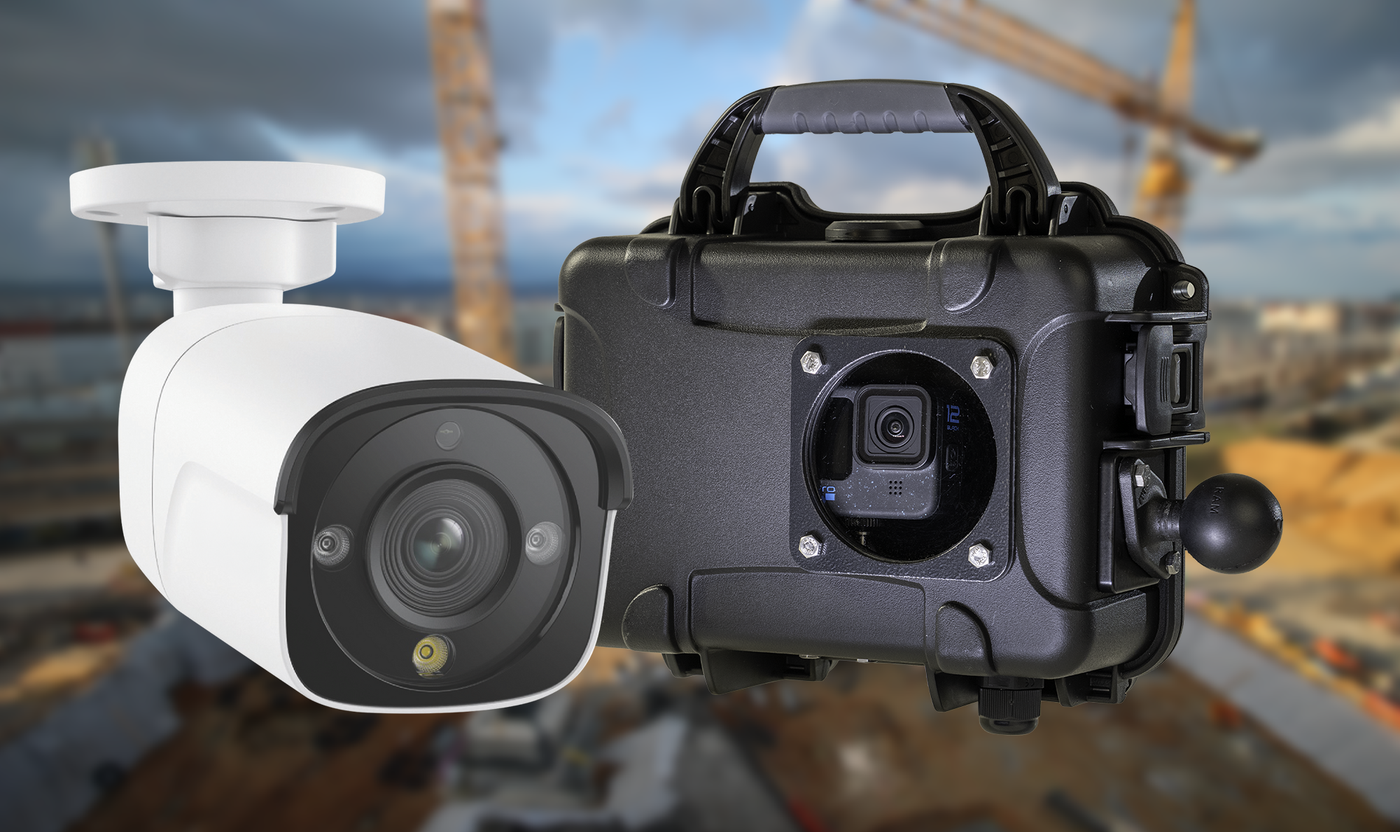
Typical use cases for construction timelapse
Construction timelapse is used for several different purposes and those purposes influence which camera approach makes sense.
Some projects need a simple long-term visual record. The goal is to document progress for internal reporting, client communication, or milestone review. In these cases, the camera mainly serves as a consistent observer. The emphasis is on stability, repeatability and dependable image delivery.
Other projects place more importance on presentation quality. The timelapse may be used in marketing, stakeholder presentations, investor updates or final project films. Here, the output is not only a record of progress but also a polished visual product. Image character, framing, and overall visual appeal matter more.
There are also mixed-use projects. A contractor may want reliable documentation throughout the build, but also a strong final sequence at handover. This is common on larger developments, public projects, or premium commercial sites.
Because of that, the IP camera vs GoPro decision is not really a question of which camera is universally better. It is a question of which approach better matches the practical goals of the project.
In general, IP cameras are often chosen when the priority is cost-efficient fixed-position documentation. GoPro-based systems are often chosen when visual quality, easier remote control, and deployment flexibility matter more. Both can work well, but they solve slightly different problems.
How IP cameras capture interval snapshots
An IP camera timelapse workflow usually relies on the camera’s own network and surveillance features. Instead of functioning like a traditional standalone timelapse camera, the IP camera typically takes scheduled snapshots or uploads images at defined intervals through its own software environment.
That means the image capture logic often lives inside the camera settings. The operator usually configures schedules, snapshot behavior, or upload behavior in the camera’s own interface. The timelapse platform then receives and organizes those images. If you want the FTP side of that process explained in more detail, including scheduled uploads, timestamp handling, archive structure, and cloud workflow design, read our guide to camera FTP upload for long-term projects.
If you want to see how scheduled snapshots, FTP upload, and cloud-based image organization work in practice, read our guide on how to turn an IP camera into a construction timelapse system.
This is an important operational distinction. With many IP camera workflows, the timelapse software is not directly controlling every aspect of the camera. Instead, the camera and the timelapse platform each play a separate role. The camera handles image creation and delivery. The timelapse software handles visual review, archive management and operational monitoring.
This approach can work very well, especially for teams that are already familiar with network cameras. It can also be very cost-effective. In general, IP cameras are the cheaper hardware option compared with a GoPro-based long-term construction setup.
But that lower hardware cost often comes with a higher technical burden. The operator usually needs more knowledge of network configuration, camera-side settings and upload workflows. In practice, that means IP cameras are often attractive for technically confident users, integrators, or service providers who are comfortable managing the camera through its own software while using a platform such as TimelapseRobot for monitoring and archive functions.
For a security camera timelapse approach, this separation is normal. For teams without that technical background, it can feel more fragmented.
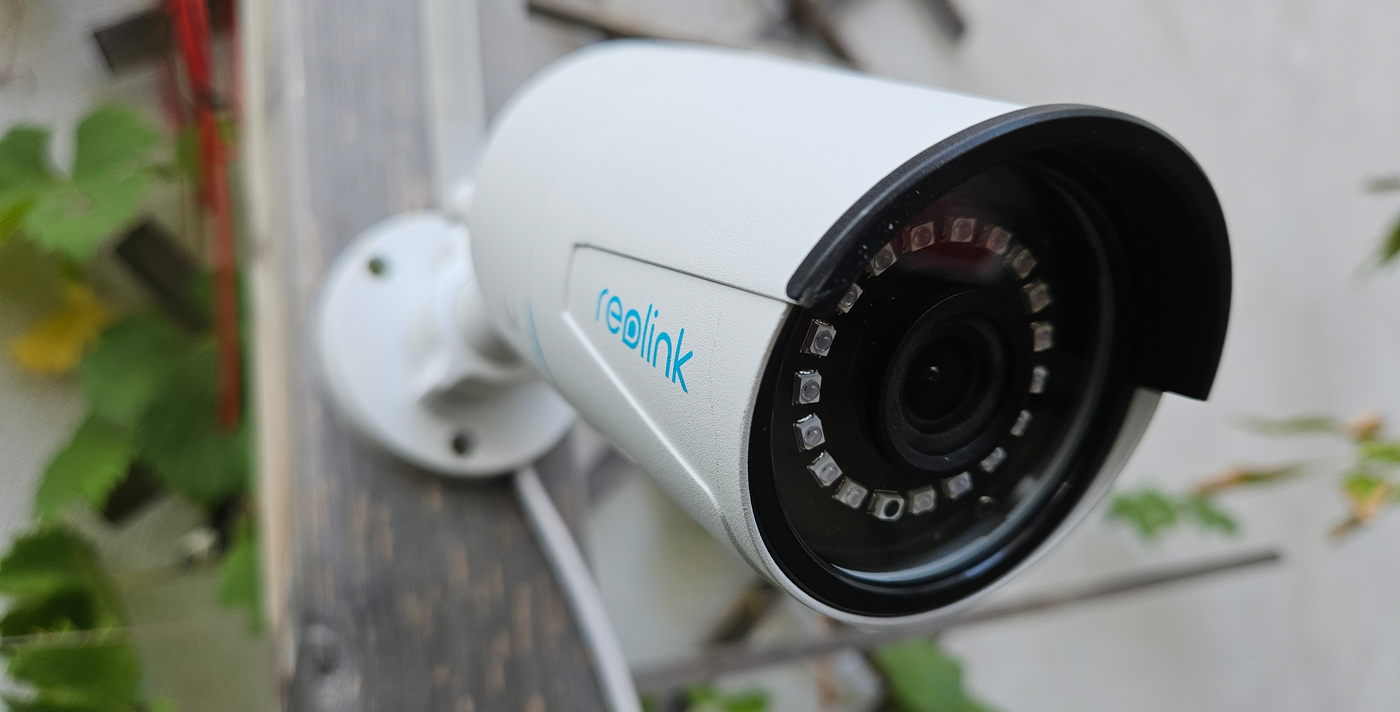
The Reolink RLC-510WA used as a construction timelapse camera for low budget projects
How GoPro cameras are used for timelapse
A GoPro-based construction timelapse workflow starts from a different design philosophy. The camera is built primarily for image creation rather than surveillance. It is naturally suited to wide-angle capture, visual storytelling, and time-based shooting. That makes it attractive for projects where the final result should look more polished and cinematic.
However, a GoPro on its own is not automatically a complete long-term construction timelapse system. It may offer built-in timelapse modes, but a long-duration site deployment still needs stable power, remote access, image upload, monitoring and recovery mechanisms. Without those, even a visually strong camera can become unreliable over time.
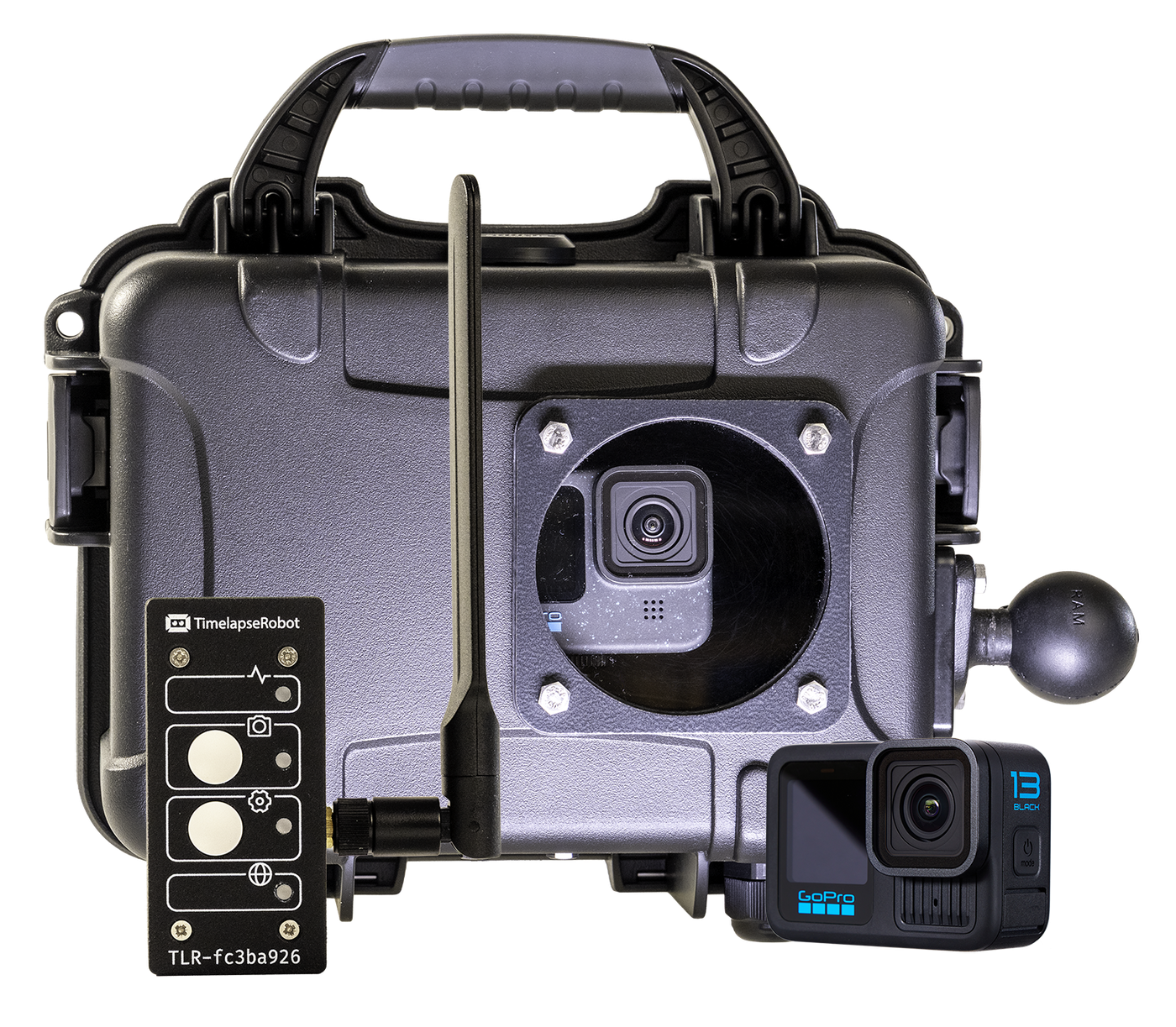
This is where supporting hardware and software become essential. In a professional workflow, a GoPro is typically paired with a controller or bridge device and a platform such as TimelapseRobot. That combination turns the camera from a local timelapse device into a remotely managed site system.
For a deeper look at how a GoPro is turned into a reliable long-term monitored setup, see our GoPro construction timelapse long-term setup guide.
One major practical advantage of this approach is that GoPro-based systems are often easier to control directly from the timelapse platform. Instead of dividing the workflow between camera software and timelapse software, the operator can often manage more of the process from one place. That tends to reduce complexity for day-to-day operation.
So although the hardware cost is generally higher than with IP cameras, the operational simplicity can also be higher. This is one of the most important differences in the IP camera vs GoPro timelapse comparison: IP is usually cheaper, but GoPro is often easier to manage in a purpose-built timelapse workflow.
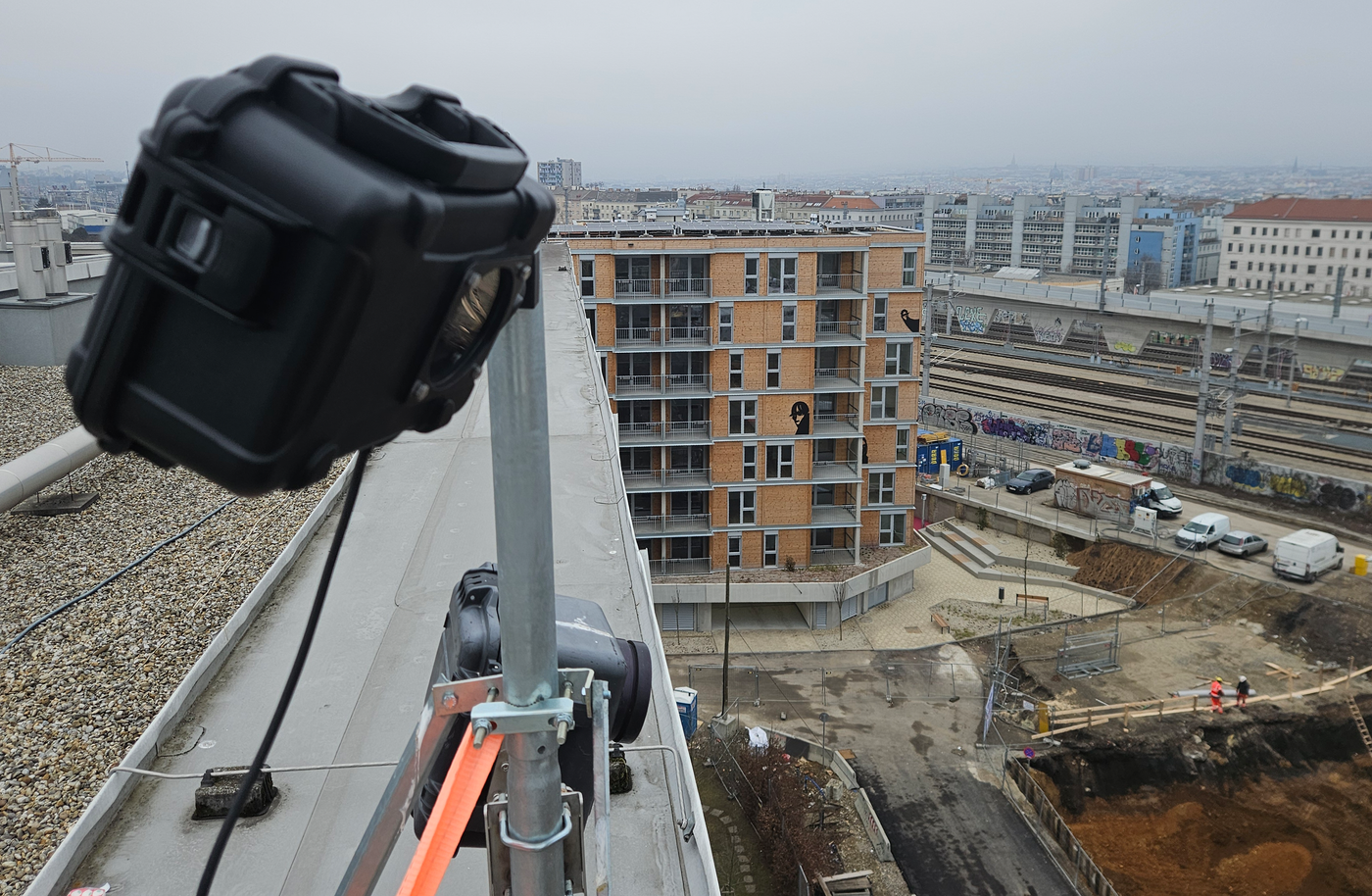
Which has better image quality, an IP camera or a GoPro?
Image quality should be discussed carefully, because “better” depends on what the footage is meant to do.
IP cameras can produce perfectly usable construction timelapse images. For documentation, progress tracking and operational review, they are often more than sufficient. If you are leaning toward the IP route, read our guide to best IP camera construction monitoring for long-term timelapse projects. Their fixed perspective can be an advantage. The framing stays consistent, the camera remains in place, and the result can clearly show site evolution over time.
This makes IP cameras very suitable when the main purpose is visual documentation. A fixed security camera timelapse angle can show concrete progress, structural changes, façade work, or movement patterns in a stable and useful way.
GoPro-based systems usually have the edge when the visual standard is higher. They are generally better suited to footage that should feel more dynamic, immersive, or cinematic. This can matter when the timelapse is intended for client presentations, promotional edits, sales material, or final project showcase videos.
So the practical comparison is not that IP cameras are low quality and GoPros are high quality. The more accurate view is that IP cameras are often optimized for documentation value, while GoPro-based systems are often stronger when presentation value matters more.
For many construction companies, documentation quality is enough. For many timelapse service providers, the visual style of the final film matters too. That is why the intended use of the footage should guide the decision more than abstract technical specs.
Installation and mounting considerations
Installation conditions on construction sites are rarely as simple as they look on paper. Mounting position, access, cable routing, weather exposure, and future site changes all affect long-term success. For a dedicated guide to weatherproofing, condensation control, mounting stability, and seasonal outdoor setup planning, read our article on outdoor timelapse camera deployments.
IP cameras work especially well when the site already supports a more structured installation approach. They are well suited to fixed mounting on buildings, poles, or permanent structures. If the site has an available network path and a suitable power plan, installation can be very clean and stable.
This makes IP cameras attractive for projects with defined infrastructure, predictable mounting points, and technically capable installers. Once properly installed, they can function as dependable fixed observers for long periods.
GoPro-based systems are more flexible in a different way. They are often easier to place where a traditional network camera installation would be harder or less practical. But they still require a professional setup. Long-term outdoor deployment means the camera must be protected, powered continuously, and integrated with a remote upload and monitoring workflow.
So GoPro is not the “simple” option in terms of physical deployment alone. It still needs proper site planning. The difference is that the wider timelapse workflow can be more self-contained, especially when paired with a dedicated bridge and platform.
In many real projects, IP installation is cheaper and more infrastructure-driven, while GoPro installation is more flexible but usually part of a higher-cost managed package.
Power and connectivity
Power and connectivity are among the most practical deciding factors in any construction timelapse camera comparison.
IP cameras often work best when the project can provide a stable local network connection. In many cases, that means LAN or Wi-Fi. This is not a problem on some sites, especially where existing infrastructure is available or where a fixed building connection is already present.
But many construction environments are temporary, incomplete, or constantly changing. In those situations, network access can be more difficult than expected. Ordinary IP camera setups often do not have the easiest path to direct LTE connectivity. That means they may depend more heavily on the site’s own LAN or Wi-Fi environment.
This is one of the strongest practical arguments for the GoPro approach when combined with a dedicated bridge system. A GoPro-based long-term setup can often be deployed more easily in environments where either Wi-Fi or LTE is needed. That flexibility can make a major difference on active construction sites, especially early in the project or on remote locations where wired network access is not realistic.
In general, IP is more attractive where networking is already solved. GoPro becomes more attractive where connectivity needs to be built into the timelapse system itself.
Power design matters equally. Neither camera type is truly professional for long-term construction use if it is treated like a consumer device running on temporary battery power alone. Both require a stable long-term power strategy, and both benefit from a workflow that quickly reveals when image uploads drop or stop.
For a deeper look at timelapse camera power supply for long-term deployments, including mains power, battery backup, solar limitations, and redundancy, read our dedicated guide.
How do remote monitoring capabilities compare?
Remote monitoring is where the difference between a camera and a system becomes most obvious.
A built-in timelapse mode may create images, but it does not automatically create operational visibility. For long-term construction timelapse, teams need to know whether images are still arriving, whether the latest uploads look correct and whether the system has fallen below expected activity.
That is why software such as TimelapseRobot is so important. It adds the operational layer that raw hardware usually lacks: an online archive, remote access to recent images and notifications when not enough uploads are being received.
Without that layer, many site problems remain invisible until someone visits the location or notices a gap too late. A professional workflow reduces that risk by making current image flow visible from anywhere.
The difference between IP and GoPro is how directly the platform interacts with the camera. With IP cameras, the operator often still needs to manage capture behavior in the camera’s own software. TimelapseRobot then serves as the visual archive and monitoring layer. With GoPro-based systems, the remote control can be more direct and unified. That often makes the GoPro workflow easier for non-technical operators, even if the hardware stack costs more.
This is one of the clearest trade-offs: IP cameras may be cheaper, but they often require more technical know-how. For a broader budgeting view beyond the camera comparison, read our guide to construction timelapse costs and what companies should really budget for. GoPro-based systems are usually more expensive, but they can provide a smoother remote management experience.
Need a construction timelapse workflow with online archive, remote image checks, and upload alerts? Explore TimelapseRobot for long-term project monitoring.
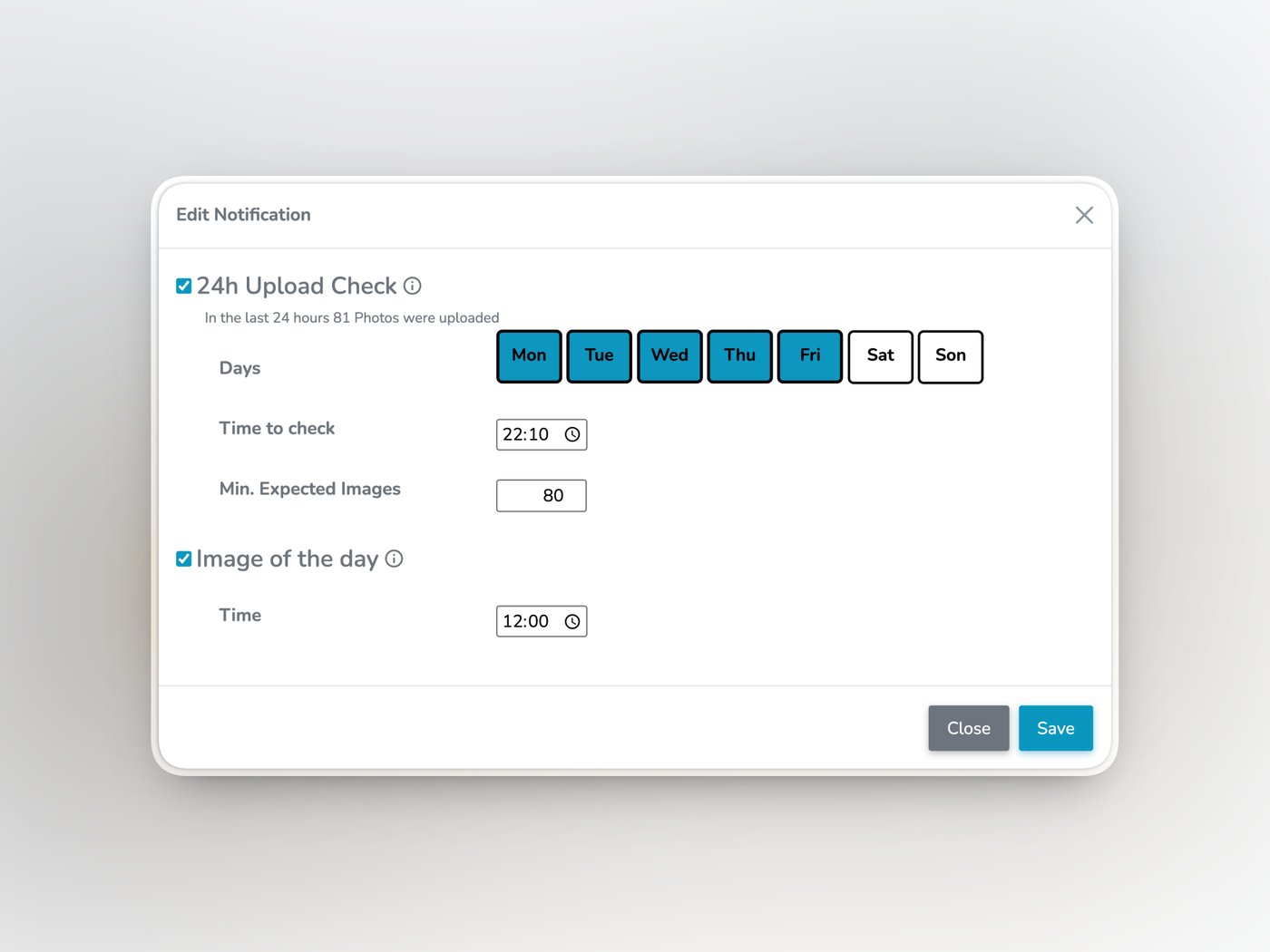
Notification settings for remote monitoring in TimelapseRobot software
How reliable are IP cameras and GoPros over the long term?
Long-term reliability is not determined by camera brand or camera category alone. For a focused breakdown of the most common construction timelapse problems that affect both setup types, read Construction Timelapse Problems: How to Avoid Failure in Long-Term Projects. It is determined by whether the full system is designed for real-world construction conditions.
For the broader framework behind reliable long-term outdoor capture, including system design, operational discipline, and risk management, read our guide to construction timelapse for long-term outdoor projects.
Construction sites change constantly. Power is interrupted. Network equipment is moved. Temporary structures appear. Maintenance access becomes restricted. Mounting environments are exposed to dust, weather, vibration, and accidental interference.
In this context, neither IP cameras nor GoPros are automatically reliable just because they have a timelapse mode.
IP cameras have an advantage in that they are naturally suited to fixed-position monitoring. That heritage can make them a strong option for repeatable long-term observation. But compatibility still matters. Not every network camera is equally suitable for snapshot scheduling, upload workflows, or clean integration into a professional timelapse process.
GoPro-based systems have a different reliability path. The camera itself is not a construction monitoring solution by default, but when paired with the right housing, controller, power design and software workflow, it becomes one. In that environment, automated recovery functions, remote control, and upload verification can make the system highly practical for long-term use.
So the honest conclusion is that long-term reliability depends less on whether the camera is an IP camera or a GoPro and more on whether the whole setup includes proper power, connectivity, weather protection, monitoring, and alerting.
IP Camera vs GoPro Timelapse: Which approach works best for different scenarios
An IP camera approach usually works best when the main priority is cost-efficient long-term documentation from fixed viewpoints. It is especially suitable when the site already has LAN or Wi-Fi available and when the team is comfortable working with camera-side settings. It also makes sense when several viewpoints are needed and hardware budget matters.
A GoPro-based approach usually works best when the final footage should be visually stronger, when LTE connectivity may be necessary and when the team wants easier direct control through the timelapse platform rather than through separate camera software. It is generally the more expensive route, but it can be easier to operate as a managed timelapse system.
For construction companies, the decision often comes down to whether the project is mainly about documentation or also about presentation quality.
For timelapse service providers, the decision often comes down to how much visual value they need to deliver versus how much installation and systems complexity they want to manage.
For project managers, the decision usually comes down to risk, simplicity, and the ability to verify remotely that the system is still working.
In many real-world cases, the best answer is not strictly one or the other. A mixed strategy can make sense. IP cameras can handle lower-cost persistent site coverage, while a GoPro-based system can provide a premium hero angle for the final edit.
If you are comparing more than these two approaches and also want to evaluate DSLR or mirrorless setups, read our guide to the best camera for construction timelapse.
That is why the best conclusion to the IP camera vs GoPro timelapse question is a practical one: IP cameras are usually more affordable and can be very effective, but they often require more technical know-how and usually depend more on LAN or Wi-Fi. GoPro-based systems are usually more expensive, but they are often easier to manage within a dedicated timelapse workflow and can be easier to deploy where Wi-Fi or LTE flexibility matters.
In both cases, the camera alone is not enough. For professional long-term construction timelapse, the hardware should be paired with suitable software such as TimelapseRobot so that images are archived online, recent uploads can be checked remotely, and notifications are sent when image delivery drops below expectations.
That is the real difference between a camera that can take pictures over time and a system that can be trusted on a live construction project.
Frequently asked questions
- Which is cheaper for construction timelapse, an IP camera or a GoPro?
- IP cameras are generally the cheaper hardware option compared with a GoPro-based long-term setup. The trade-off is a higher technical burden: the operator usually needs more knowledge of network configuration, camera-side settings and upload workflows. GoPro-based systems cost more but are often easier to manage in a purpose-built timelapse workflow — in short, IP is usually cheaper, GoPro often simpler to operate.
- Do I need technical knowledge to run an IP camera timelapse?
- More than with a GoPro-based workflow. With IP cameras, capture schedules and upload behavior are usually configured in the camera's own software, while the timelapse platform handles the archive and monitoring — a split that suits integrators and technically confident users but can feel fragmented for others. GoPro-based systems can often be controlled more directly from one platform, reducing day-to-day complexity.
- Can a construction timelapse run on a site without Wi-Fi or LAN?
- Yes — this is one of the strongest arguments for a GoPro paired with a dedicated bridge system, which can be deployed where either Wi-Fi or LTE is needed. Ordinary IP camera setups often lack an easy path to direct LTE connectivity and depend more heavily on the site's own LAN or Wi-Fi, which is difficult on temporary, incomplete or constantly changing sites.
- When is a GoPro the better choice than an IP camera?
- When the final footage should be visually stronger — for client presentations, promotional edits or final project films — when LTE connectivity may be necessary, and when the team wants direct control through the timelapse platform rather than separate camera software. For shorter projects where portability and image quality matter more than unattended uptime, a GoPro is also usually the better fit.
- Can IP cameras and GoPros be combined on the same project?
- Yes, and in many real-world cases a mixed strategy is the best answer. IP cameras can handle lower-cost persistent site coverage from fixed viewpoints, while a GoPro-based system provides a premium hero angle for the final edit. This is common on larger developments where dependable documentation and a strong handover sequence are both required.
- Do both camera types still need timelapse software?
- Yes. Even if a camera has a native timelapse or snapshot function, long-term projects benefit from software such as TimelapseRobot to create an online archive, allow remote image checks and send notifications when too few images are uploaded. Without that operational layer, site problems remain invisible until someone visits the location or notices a gap too late.
Planning a long-term construction timelapse?
Discover the system built for multi-month and multi-year construction deployments.
Explore the Construction Timelapse SystemConnect your own camera
Turn your FTP/IP camera into a timelapse system — start for free.
Step-by-step setup guides: Reolink RLC-510WA · Bixion


